
The Quiet Place for Time
The city is still hushed. A soft, grey light filters through the window, catching the dust motes dancing in the air. It’s that familiar, quiet moment before the day really gets going—a pause between sleep and the first metro train rattling past on the tracks below. We don’t rush these minutes.
On the dresser, a few timepieces rest. Each one sits in its designated slot, a small rotation that tells a story not of value, but of days lived. The choice for today is almost unconscious, a hand hovering over the options before settling on one. It’s a decision guided by mood, by the feel of the morning, by the week that was and the one that’s about to begin.
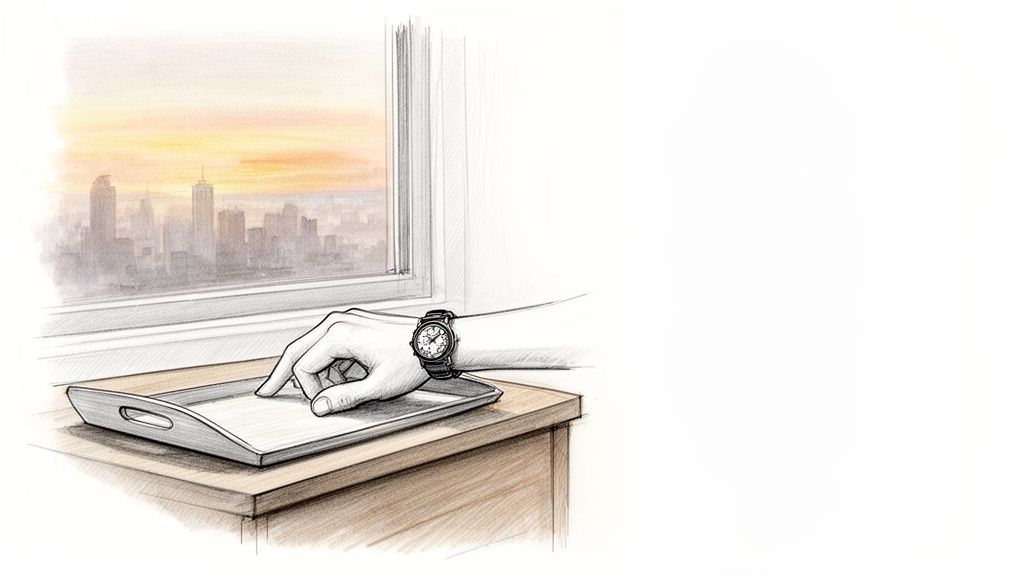
This little ritual has become a constant. It’s the first real decision of the day, yet it feels less like a choice and more like a continuation. The feel of cool metal, the soft click of a strap closing—these are the small, grounding sensations that signal the shift from the quiet of home to the rhythm of the city. We notice how these small acts of order can bring a sense of calm.
Continuity in Quiet Corners
There is a difference between storing something and placing it. We see it in the gap between a cluttered drawer where things get lost and a valet tray where they are placed with purpose. Bringing a little order into a space can change its feeling, creating a quiet island in the middle of a day. This feels most true at the close of things.
Imagine coming home after a long day of meetings in DIFC. That return is a sigh of relief. The city's buzz fades, and the quiet of your own space takes over. Taking off a watch is part of that shift—a small, physical bookend to the day. Placing it in its spot on a wrist watch organiser isn't just about neatness; it’s a ritual. It’s drawing a line between the public self and the private one who is finally home.
It works the other way, too. For the night worker, the creative mind working while the city sleeps, the act of putting a watch on is the real beginning. It's a quiet moment of preparation for the hours ahead, a silent partner for the focused work to come. In both cases, the organiser is a home base—a point of departure and return.
A simple tray or box quickly becomes more than just a place to put things. It’s a visual cue, a reminder of the story your rotation tells. Seeing the watches lined up, each waiting for its moment, encourages a philosophy of use over simple accumulation. It's not about needing more; it's about appreciating what is already there. This practice of the continuity of time and personal routines is something we think about often.
This sense of order is not about control. It is about respect for the objects that move through our lives with us. When we embrace the idea of organizing all that you value, giving our timepieces a proper home feels natural. It turns a mundane task into something more thoughtful, a small anchor in a day that unfolds with every tick of the second hand.
The Outfit and the Object
A wrist watch organiser isn't just a box; it's a launchpad for the day. It’s that quiet corner where a mood for the day ahead meets the reality of a closet. Choosing a watch isn't just about telling time—it’s about deciding how the day will feel.
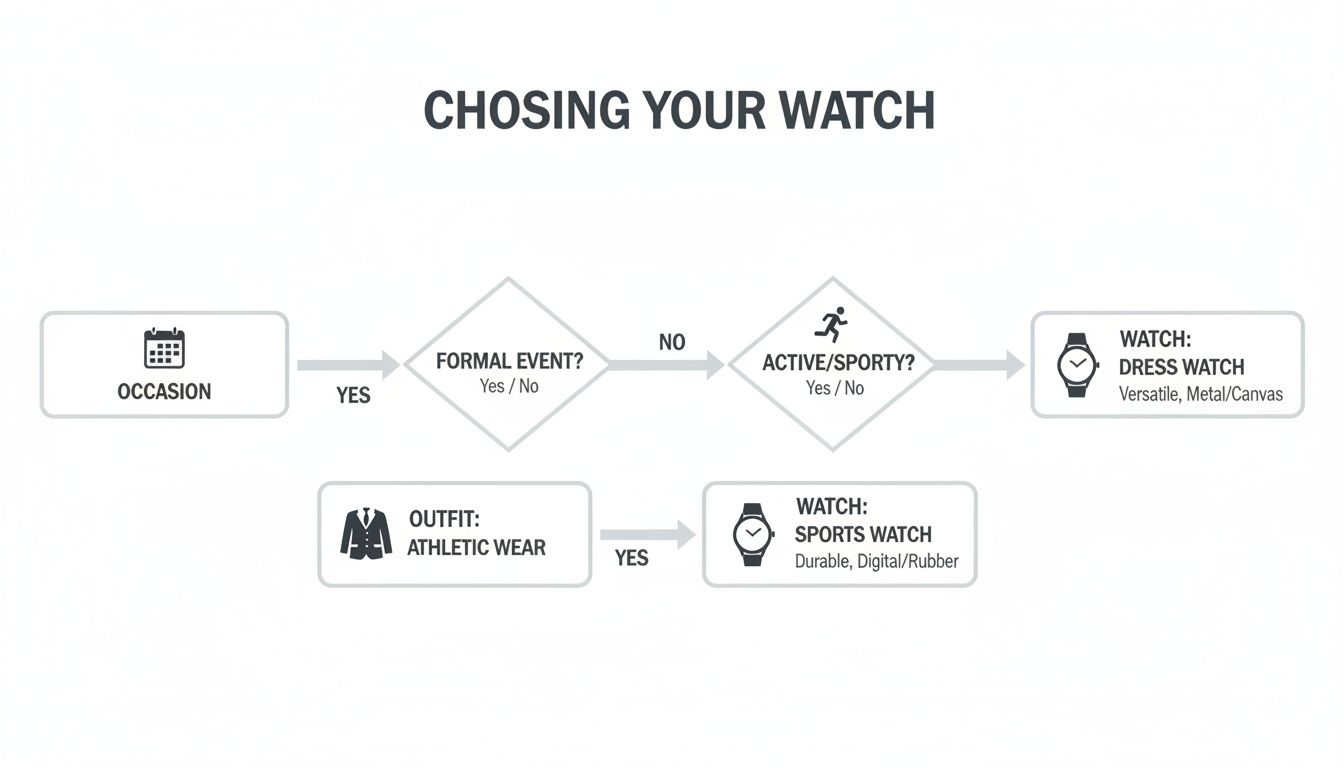
A slow walk along Jumeirah Beach calls for a different feeling than a series of meetings downtown. For the walk, one might reach for a watch on a simple fabric strap that pairs with a rolled-up linen shirt. But for the boardroom, something sharper is required. A polished steel bracelet that peeks from under a cuff sends a different message.
This small daily choice is a quiet act. The watch is part of the team. It has to work with that worn-in leather jacket or those favorite sneakers that have seen better days. It is a supporting character, not the star of the show. Your organiser is where these decisions happen, a physical mood board where each watch nestled in its slot is a different script for the day you're about to have.
A Place in the Everyday
We have never been fans of designing watches just to be locked away. A beautiful timepiece sitting untouched under glass doesn’t feel right to us. A watch is meant for living. It’s for catching the late afternoon sun on a café terrace and for being there in all the small moments that stitch a life together.
Our philosophy is straightforward: make timepieces that fit into a daily rotation. They are designed to feel at home in a simple wrist watch organiser—a soft leather roll for a weekend trip or a valet tray that catches keys and coins at the end of the day. Each one is a quiet companion, not a loud statement piece.
We have noticed that people are more interested in rotating a few good watches than amassing a huge collection. It’s not about how many you own, but how the ones you do have fit the different chapters of your day. This ties into another core belief of ours: repair over replacement. When an object travels with you, it picks up stories. Those aren't flaws; they're the patina of a life lived. We build our watches to last and believe they should be cared for.
This focus on enduring quality makes a good organiser feel essential. The appreciation for classic timepieces is clear in places like the UAE, a significant part of the regional watch market and its growth on cognitivemarketresearch.com. In a culture that values heritage and design, an organiser is a natural part of ownership. Our watches fit into this world. They aren’t meant to be the loudest object in the room; they’re designed to feel like they have always been there. It is this quiet confidence we strive for.
The Light Changes
The light has changed. That sharp morning brightness has softened into a warm glow that pools on the floor. Outside, the city is finding its evening rhythm—a different energy, a slower pulse than the morning rush. The day’s tasks are done, the laptop is closed, and the room is quiet again.
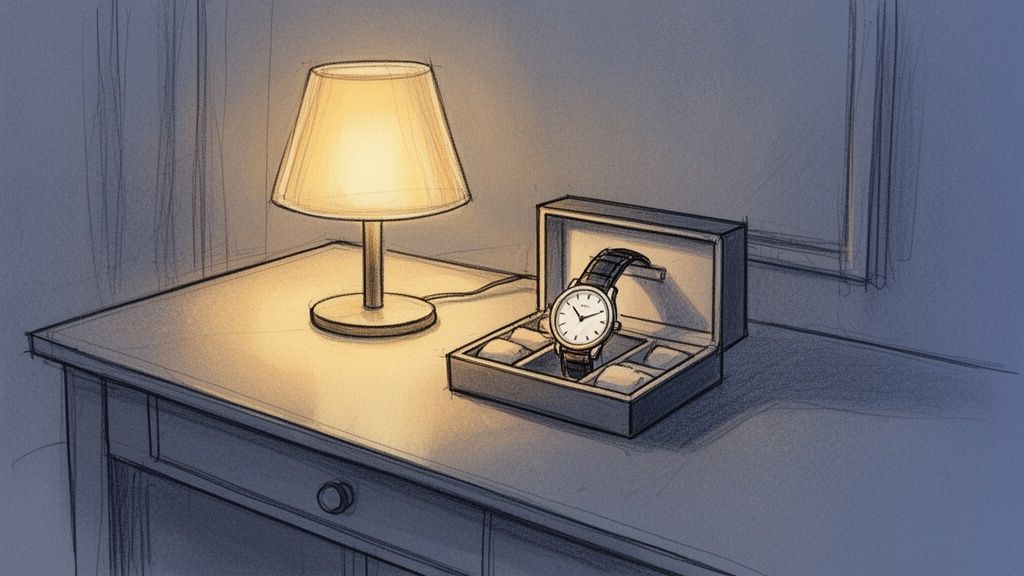
The watch slips off the wrist, its metal cool against the skin. It's a practiced gesture, a familiar motion that draws a line between public and private time. It is placed back into its slot in the wrist watch organiser. That soft click as it settles is a sound of completion, a quiet full stop on the day.
The room is settling into dusk. The watch is back where it belongs. The story doesn’t end here; it just pauses, waiting for the light of a new morning. Tomorrow, the cycle begins again.