
The Quiet Turn of a Watch Winder Box

The day winds down. Through the window of the apartment, the city lights bleed into long streaks against the twilight. The room is quiet, the only sound a familiar, low hum from the building’s systems—a constant soundtrack to late nights in Dubai. On a dark wood dresser, next to a small stack of books, a single object keeps its own silent rhythm.
A polished watch winder box. Inside, a timepiece turns with a slow, deliberate grace. The city outside might be settling in, its energy shifting to a calmer pulse, but this small, precise machine carries on. It doesn’t watch the sun or follow a calendar. It follows its own internal logic, a quiet commitment to perpetual motion.
Continuity in a Quiet Room
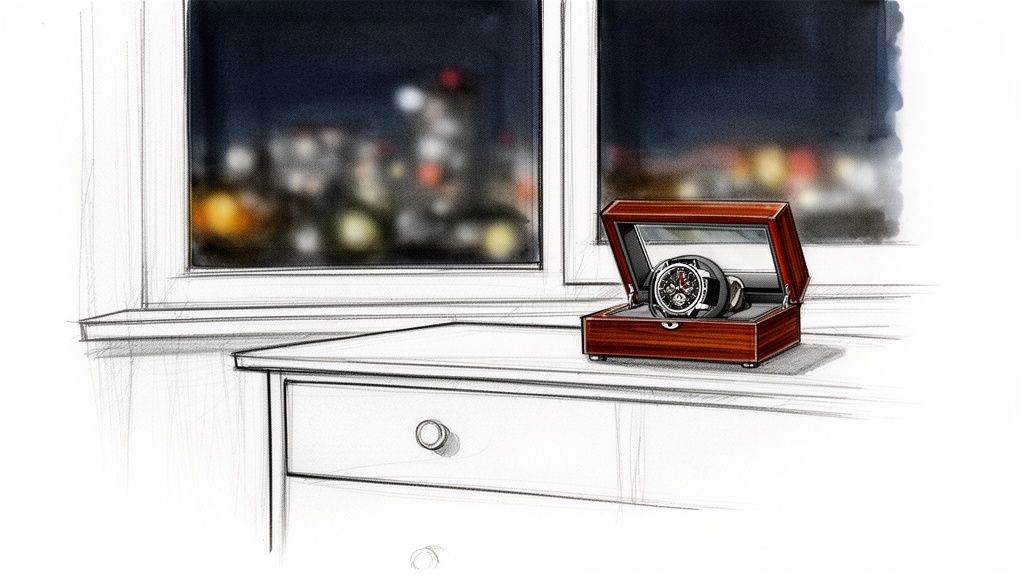
We notice the objects that seem to keep their own time. They become constants in rooms that see outfits change and moods shift. They ask for nothing but a place to sit, and in return, they offer a subtle sense of continuity. This gentle turning isn’t about urgency; it is the opposite. It’s a soft, mechanical breath, a promise of readiness.
The watch inside, with its familiar dial and steel case, is at rest. It’s not on a wrist navigating a crowded metro platform or being checked before a late meeting. Instead, it’s being quietly cared for, its mechanical heart kept alive by a motion so subtle it almost melts into the silence. It's a scene we recognize: the intersection of human stillness and mechanical persistence.
In these moments, we see how the things we choose to keep reflect a certain rhythm. The box isn't just a utility. It's a silent participant in the room's story, a small stage where today’s companion waits for its cue. That gentle turn is a promise—tomorrow is coming, and we'll be ready for it. This small act of maintenance is a quiet nod to the mastery of time.
What Stays, What Changes
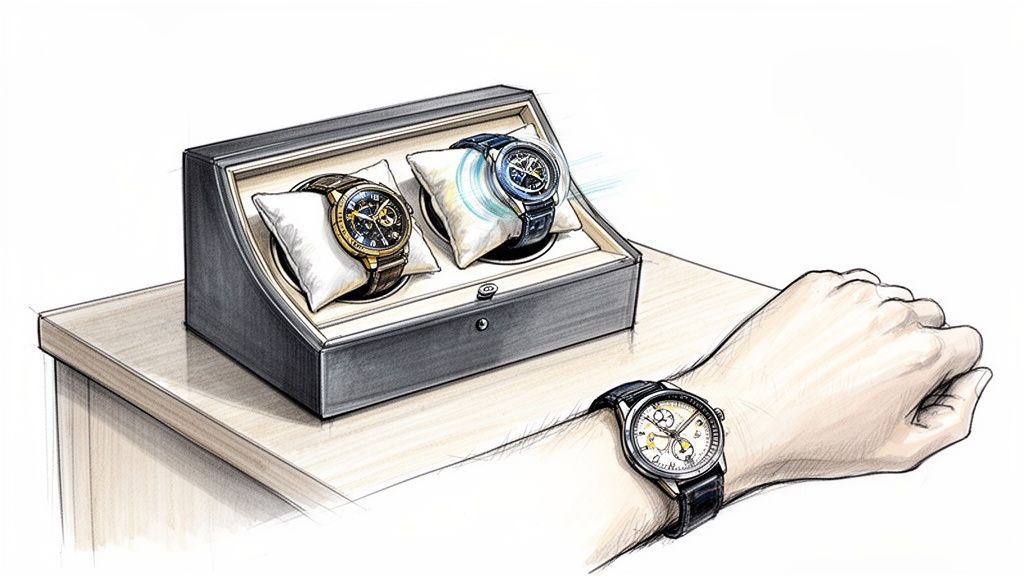
The morning routine feels unchanged. The same walk to the café, the same order. The watch on the wrist is a constant, a familiar weight. It was chosen without thought, part of the uniform for a day that feels like the last. This is the comfort of repetition.
But tomorrow, the mood might shift. A different meeting, a later start, a change in the light. The black linen shirt is chosen instead of the usual white cotton. And with it, a different watch. The one with the leather strap, not the steel bracelet. It’s a small adjustment, but it changes the feel of the day.
This is the rhythm of rotation, not collection. It’s not about owning more, but about having the right object for the right moment. The pieces that aren't worn still need to be part of the story. They can’t just stop. An automatic watch, left alone, will run down. Its calendar will fall behind. It will lose its connection to the present.
The watch winder box sits on the shelf, a quiet enabler of this rotation. It keeps the other timepiece—the one left behind—in sync with the world outside. It’s not a display case for an archive. It’s a place of readiness, ensuring the story of our days can continue without interruption, a theme we return to in our musings on the watches we wear.
A Quiet Nod to Care
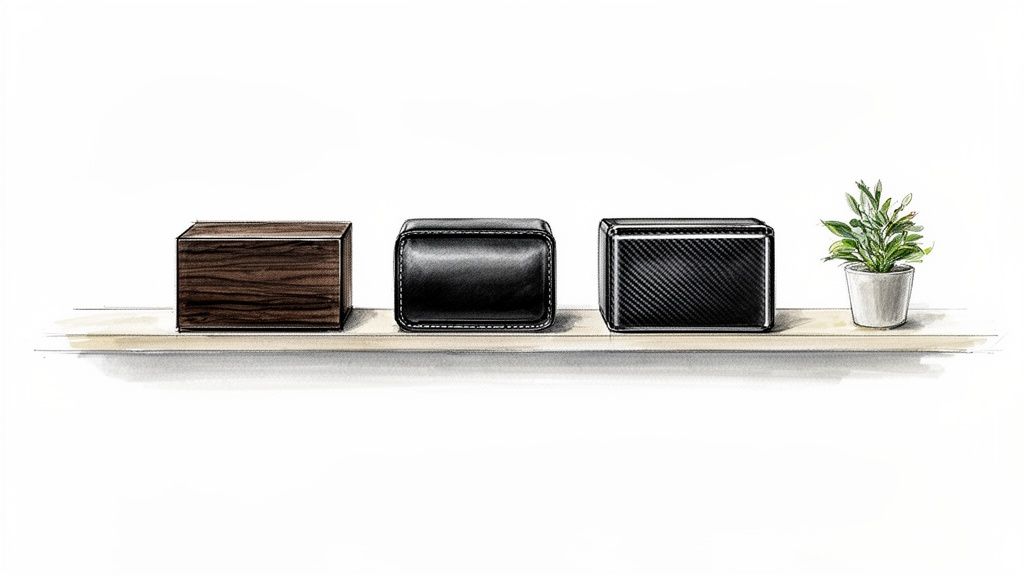
At Spectrum, we design for the rhythm of life. Our watches are meant to be worn, to move with you down familiar city streets. They are powered by you, by the cadence of a day well-lived.
But we also think about the hours they rest. A watch winder box is an extension of our philosophy. It’s a quiet nod to the idea of caring for your possessions, of maintaining the things you’ve chosen to live with. It is a partner to a thoughtful rotation.
We don’t believe in collecting for its own sake. It’s about choosing the right watch for the day, for the outfit, for the mood. A winder keeps the others in your rotation ready, their mechanisms cared for. This is how continuity is maintained, and why we offer repair services for our watches alongside thoughtfully designed accessories. It's all part of the same story: what we keep, we care for.
The Morning Light
Let’s go back to that room. Morning has broken. Sunlight streams through the window, a warm glow that glints off the glass face of the watch winder box.
Inside, the gentle rotation has paused. The watch is still, its power reserve ready. A different timepiece, lifted from its cushion moments before, is now on a wrist, destined for a crowded metro platform. The daily ritual clicks into place.
The box sits on the dresser, a silent keeper of time yet to be spent. It’s waiting for the evening, for the familiar swap that marks the end of a long day. This is how time moves for us—not in a frantic dash, but in a steady, reliable rhythm. Tomorrow, it all happens again.
Additional Details on Watch Winders
For those who appreciate the mechanics, understanding what a watch winder is and why every collector needs one provides further context. The principle is simple: it simulates the motion of a wrist to keep an automatic watch wound. This is particularly relevant in markets like the UAE, where an appreciation for horology is well-established, as detailed in reports on UAE luxury watch market trends on marknteladvisors.com. A winder ensures that whether you own one watch or a small selection of various timepieces, each one is maintained and ready.

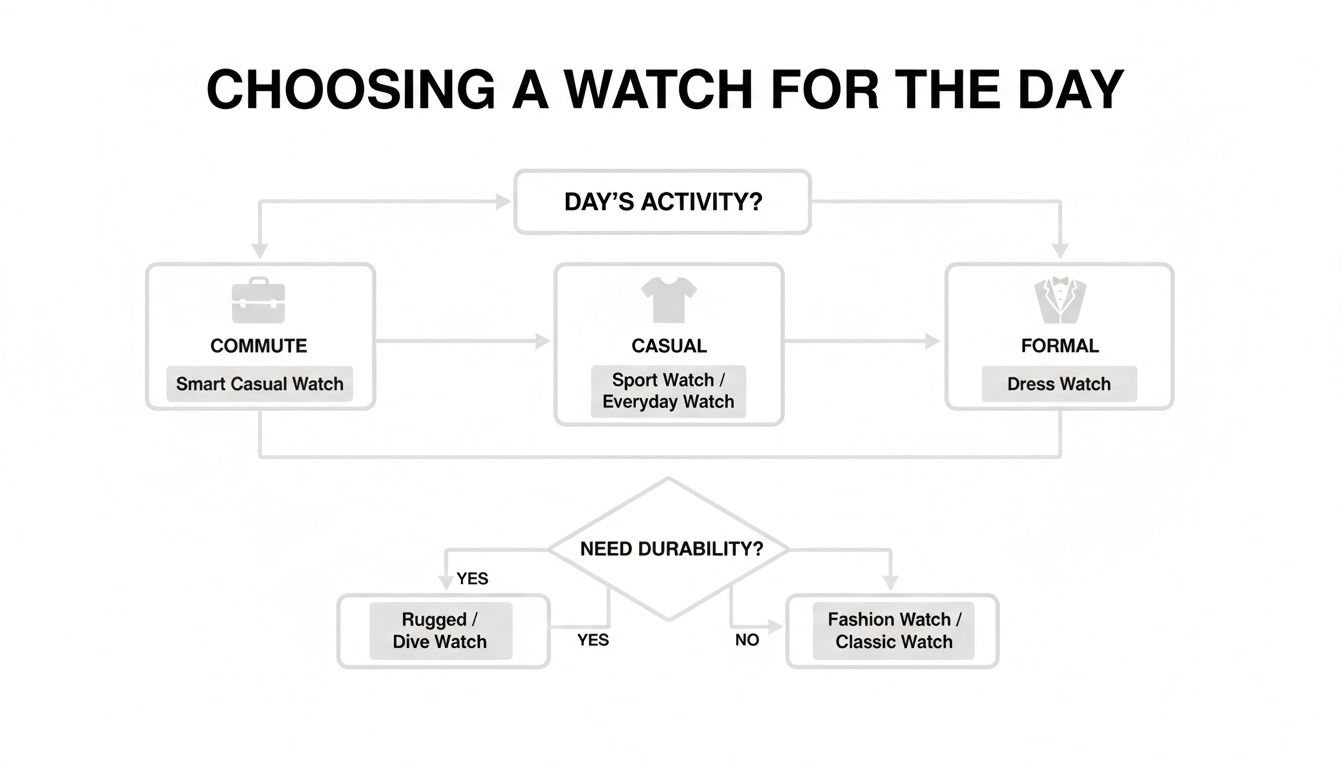
This idea of readiness is central. The choice of which watch to wear is part of a daily routine, influenced by mood and activity. A winder simplifies this by removing the need to reset a watch that has stopped. For more on our approach to watch care, our FAQ section offers some thoughts.