
A Quiet Home for Time: The Box for Storing Watches
The first light of a new year filters through the window, pale and soft. Outside, the city is still hushed, its usual thrum not yet up to speed. Inside, the only sound is the low gurgle of an espresso machine, a comforting rumble in the stillness. There are no grand resolutions here. Just the quiet understanding that time, as always, continues.
On a dark wood dresser, a simple box for storing watches sits closed. It’s part of the room’s furniture, unassuming but present. A hand reaches out, not with the energy of a fresh start, but with the steady ease of a well-worn habit. The lid lifts, revealing the quiet order within.
Each watch rests in its own compartment, a small gallery of companions. The choice isn't a decision so much as a feeling, a motion repeated countless times before. The one with the dark face for a day of focused work, or the stainless steel model that plays with the light on a walk along the canal? This moment is a quiet nod to the fact that days just keep moving, carrying with them the things we choose to keep close.
Time Continues, Quietly
The day winds down. The sharp afternoon light bouncing off the glass towers softens, turning them into muted silhouettes against the evening sky. You’re home. The watch that kept pace with your day is unclasped. There's a quiet, satisfying heft to it in your hand—a definite shift from the public world to the private one.
This isn’t about just stashing away a possession. It’s a mindful rotation, a silent conversation between you and the objects that mark your time. The simple act of returning a watch to its home—its box for storing watches—is a nod of respect. It's a small, unseen ritual that quietly restores order at the close of a day.
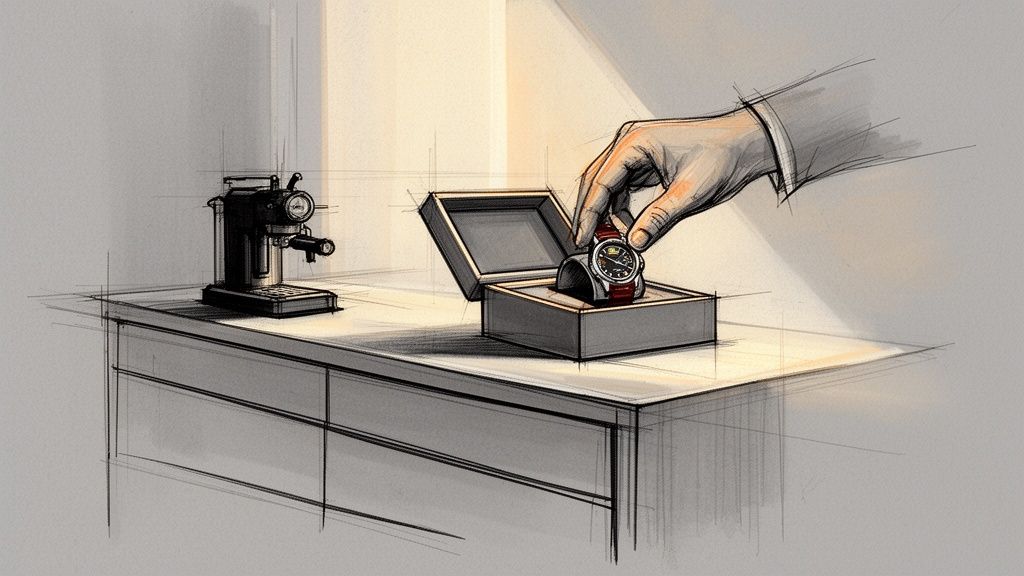
We notice how repetition grounds us. The choice made this morning was probably intuitive, a feeling tied to an outfit or the day's agenda. Now, as dusk settles, that watch is returned to its designated slot. Beside it, another waits its turn. This daily switch is a subtle story in itself, a physical log of shifting moods and intentions.
A simple box provides the structure for this quiet narrative. It’s not a trophy case; it’s a guardian for a personal story, making sure each piece is kept safe and ready for its next outing. It brings a gentle order, a welcome contrast to a world that’s always buzzing. The simple cycle of choosing, wearing, and returning becomes a calming, predictable rhythm.
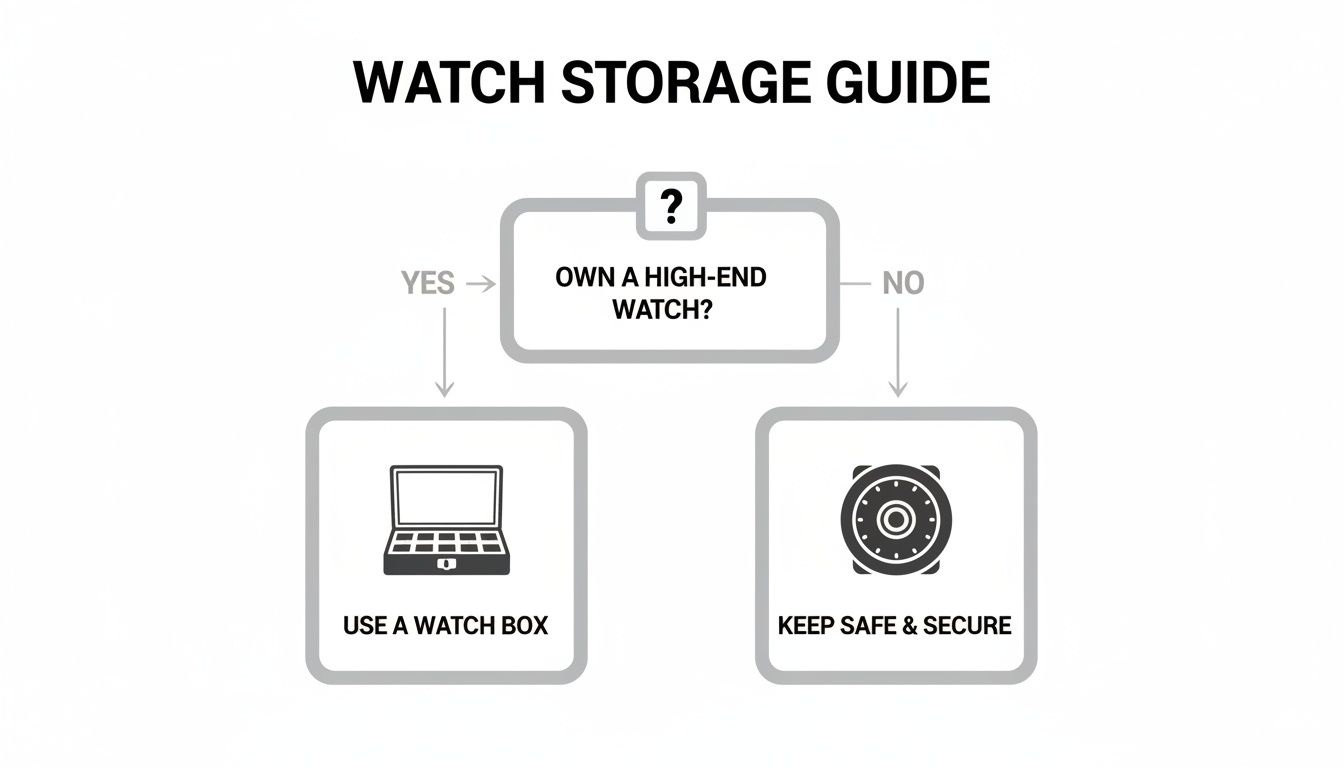
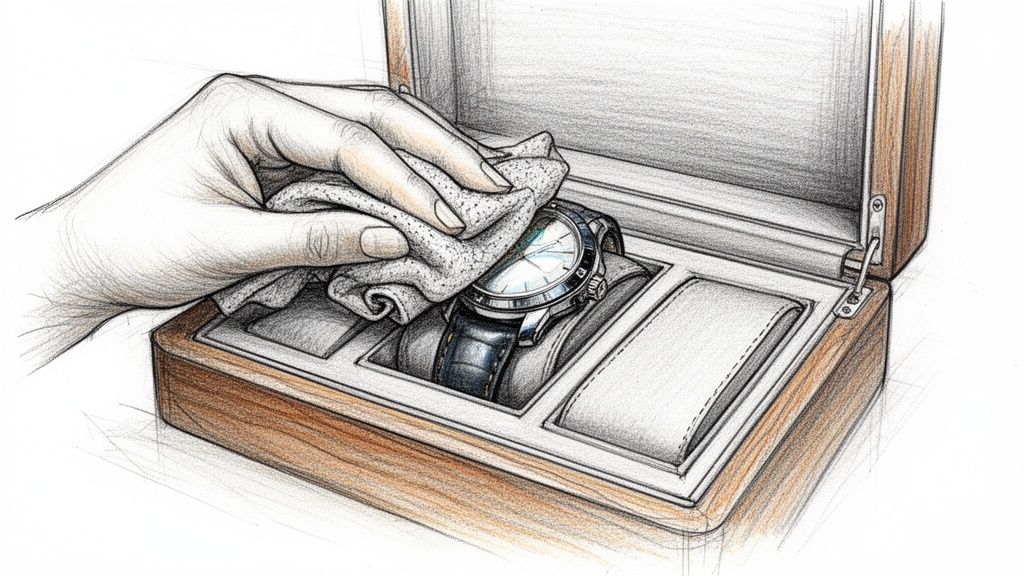
This ritual has a practical side, too. The climate, the ever-present fine dust, can be tough on delicate mechanisms. Keeping things safe is how we honor them. That quiet click of the box closing is a small commitment to longevity, a theme we often return to in our thoughts on Time Mastery. This personal layer of protection is part of a larger practice of care. For a wider view, resources on understanding physical security reinforce the idea that true safety comes from thoughtful, consistent habits. The box is more than storage; it’s the stage for a daily ritual that grounds us.
An Outfit’s Quiet Companion
Think about the morning routine. The alarm, the sunlight creeping in, the piecing together of the day. A shirt is chosen, then shoes. And then, the watch. Is it on the nightstand? Under some mail on a dresser? A well-chosen box for storing watches makes this part of the ritual feel settled.
It’s the quiet moment before the day kicks in. You open a simple box. Inside, your watches are organized, safe. Maybe today is a stainless steel kind of day to match that crisp shirt. Or perhaps the evening calls for something with a darker dial. The box isn't just storage; it’s a launchpad.
It should be a natural part of the room’s landscape, fitting in as comfortably as a favorite lamp or a stack of books. It could be a soft leather case or a single-watch pouch for a weekend trip. Our own collection of watch accessories is designed with this in mind—objects that fit not just a watch, but a life.
A Philosophy of Everyday Rotation
We don’t make watches that are destined to sit in a vault. Our pieces are crafted for the daily rhythm—the kind of companion that’s with you from that first coffee to a late metro ride home. It only makes sense that this philosophy carries over to how they are kept.
A simple, well-made box for storing watches is an extension of that idea. It’s not about displaying a massive collection. It’s about having a dedicated, quiet home for the few reliable timepieces you count on day in and day out. This is the core of an everyday rotation.
We are focused on longevity. Our watches are built with materials that handle the pace of city life. But proper care completes that promise. A good watch box isn’t just storage; it’s part of an ecosystem of care. It’s a quiet nod to owning fewer, better things. For more on our take on time and the objects that measure it, our watch journal continues the story.
The need for thoughtful storage is something we see firsthand here. In a place where harsh conditions are a reality, a simple box becomes a tool for continuity. Placing your watch in it at the end of the day becomes a small, grounding ritual. A silent promise that this object will be there, ready for tomorrow. When a timepiece needs more, our repair services are a direct extension of this same belief.
The market for watches here is significant, valued at over $2.18 billion. This brings a real need for protective storage into focus. Properly stored watches can last longer, reducing the need for replacements. You can explore the data behind the regional watch market for a deeper look.
The Day Closes
The watch comes off, its cool metal still carrying a hint of warmth. It slides back into its slot in the box on the dresser. The lid closes with a soft, satisfying click, a quiet period at the end of the day’s sentence.
In the stillness of the apartment, the story pauses. The city outside may be settling down, but in this small, curated world, tomorrow is already waiting. The cycle will begin again with the sunrise, just as it did today.
Common Questions About Storing Watches
We hear from people who just want to do right by the watches they rely on. A box for storing watches is part of a ritual, a small nod of respect to your timepieces. Here are a few things we’re often asked.
Do Automatic Watches Need a Winder?
If you wear your automatic watch every day or every other day, you don’t need a winder. The motion of you going about your life is all the power it needs. A cushioned box is enough to keep it safe overnight. There’s something grounding about picking up a watch that’s been resting and setting the time. It’s a moment of connection.
If you rotate several automatics, a winder can be practical. For those building a serious collection, keeping track is important. You might find a guide on creating a watch collection inventory helpful for that.
How Should I Store My Watch Long Term?
Putting a watch away for a while is about environment, not movement. A cool, dry spot, away from direct sunlight, is what you want. The goal is to protect it from humidity and big temperature swings. The original box it came in is a good option, but any dedicated case that shields it from dust is fine. The best care is often the simplest. It’s about creating a safe, quiet space. For more questions, our FAQ section is always there.