
Best watches for women: A quiet continuity

The first light is thin and grey, finding the dust motes over a dark wood desk. Outside, the city is just beginning its low rumble, a familiar sound that doesn't demand attention. In here, it’s quiet. The air holds that cool, pre-dawn stillness—a pause before the day begins.
A hand reaches for a ceramic mug, the steam a slow curl in the still air. That first sip of coffee. Beyond the window, the same patchwork of rooftops and windows, a scene that repeats with small shifts each morning. We notice the light change, second by second, from flat grey to a soft gold that spills across the floor. There is no rush in this moment, just a quiet observation of time passing.
This is a rhythm we know, a pattern that anchors the day. These quiet moments, just like this one, are often where things settle. They are a reminder of continuity, of the small rituals that connect one day to the next, like characters in a story that continues. This quiet, repetitive scene feels like the real beginning.
The Philosophy of Continuity Over Collection
We notice the quiet rhythm of the city. The same faces on the 7:15 AM metro, holding the same brand of coffee. The same evening walkers on their usual route through the park, their pace steady as the seasons turn. There is a story in that repetition, a sense of being grounded that comes only from the familiar.
In a world that is always announcing what is new, next, and necessary, we are drawn to the things that stay. There is comfort in the objects that journey with us from one day to the next, the ones that do not ask to be replaced. This is not about resisting change; it is about appreciating continuity. It is the simple difference between collecting and keeping.
Collecting is a hunt for more. It is always looking outward, driven by a desire for the next piece, the limited edition, the seasonal trend. It can be a loud, busy activity. But keeping? That is an inward act. It is about the quiet relationship built with the few things that have earned their place.
We see it in the way a founder pulls on the same well-worn jacket before heading to the office, its fabric molded to her shoulders. It is there in the creative who uses the same pen for every late-night session, its familiar weight a comforting anchor. These are not just things; they are extensions of a routine, silent partners in the story of a day. They carry the small marks of life—a faint scratch, a soft patina—that signal presence, not damage.
Repetition as a Form of Rhythm
The daily commute, the walk home, the final check of the locks at night—these are the steady drumbeats of our lives. The objects we carry through them become part of this rhythm. A watch, for example, isn't just an accessory to be swapped with every outfit. It is a constant. It ticks through the high-stakes meeting and the quiet lunch break with the same, unwavering pace.
It feels different from a phone, which is always buzzing and demanding attention. A watch simply is. It is a point of reference, a small, mechanical truth on your wrist. Choosing this kind of constancy is a conscious decision. It is a choice to value endurance over novelty, to find style in what lasts rather than what has just landed.
Choosing an object that endures is a quiet act of confidence. It is a belief that what you have is enough, that your story is about continuation, not constant acquisition.
Repair as a Mark of Respect
This philosophy extends to how we care for the things we decide to keep. The modern impulse can be to replace what is broken, to trade old for new without a second thought. But there is a deep, quiet satisfaction that comes from repair. Mending a tear, polishing a scuff, or replacing a battery is an act of respect for the object and the history it carries.
It is an acknowledgment that an item’s value is not just in its function but in its journey. The best watches for women are not always the shiniest new models; they are the ones that have been worn, loved, and maintained. They become keepers of time in more ways than one. We think a lot about this connection between timekeeping and personal history, something our thoughts on mastering your time touch on from another angle. We believe that caring for an object is its own way of honoring the time it has measured.
Integrating the Things We Keep
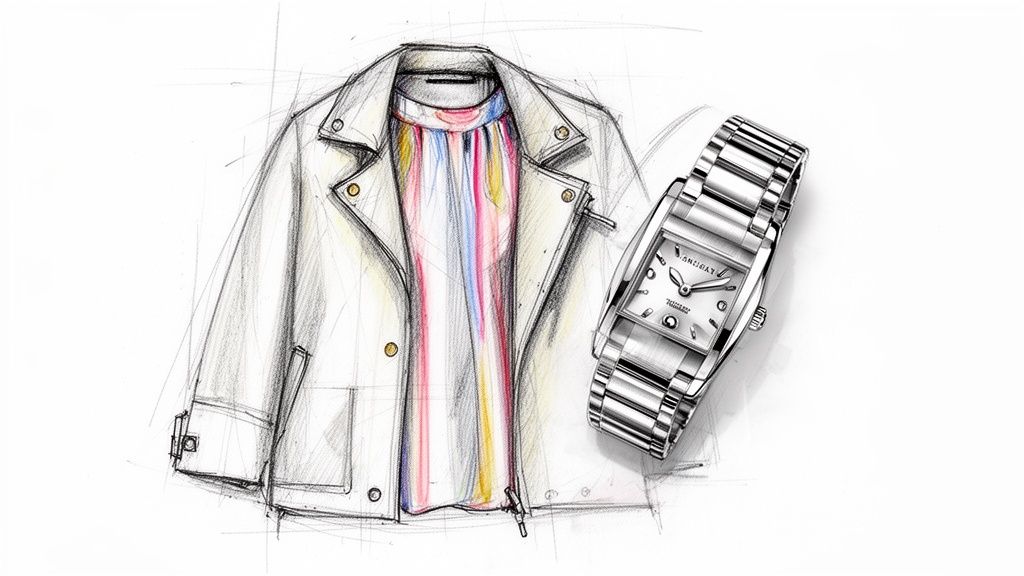
Think about the morning routine. It is a quiet choreography of textures. The soft feel of a linen shirt, the familiar weight of a favorite blazer pulled from its hanger. These choices are made by feel, not just by sight. It is all muscle memory, an unconscious comfort in the things reached for without a second thought.
Then comes the final piece: the cool, solid touch of stainless steel against skin. It is not an afterthought, but a finishing touch. The watch is part of the uniform, as essential and unspoken as the first cup of coffee. It settles onto the wrist with a quiet click—a small moment of closure before the day truly begins. We notice it is not an addition to the outfit; it is simply part of it, as if it were always there.
A Constant in Shifting Light
Throughout the day, this single object lives a dozen different lives. In the sharp morning sun filtering through an office window, its metallic finish is bright and clean. By the softer afternoon light of a café, it appears more muted, almost warm. And under the low glow of a streetlamp in the evening, it catches just enough light to mark the passing hours.
This subtle transformation is part of its character. The best watches for women are not the ones that demand attention, but those that exist seamlessly within the flow of a day. They are anchors that shift with the light, their presence felt but never forced. We see how a watch like this might look in different settings, and the importance of clear jewelry product photos becomes obvious.
From Workwear to Weekend
We see how a great watch pairs with a crisp suit for a Monday meeting, its clean lines adding a touch of structure. Then, we see it again on a Thursday evening, resting against the soft fabric of a traditional abaya, its metallic sheen offering a quiet, elegant contrast. Come the weekend, it is there alongside casual denim, a constant thread of understated style.
The true measure of an object is not how it performs in a single moment, but how it lives across all of them. It is the one piece that remains when every other element of an outfit changes.
This is the kind of effortless integration we look for in the things we decide to keep. They should not demand a specific mood or a special occasion. Instead, they should adapt, becoming a silent testament to continuity. They are chosen not to be seen by others, but to be a familiar, comforting presence for ourselves. The watch does not define the day; it simply accompanies it, a steady rhythm on the wrist as the hours unfold.
A Watch as an Everyday Companion
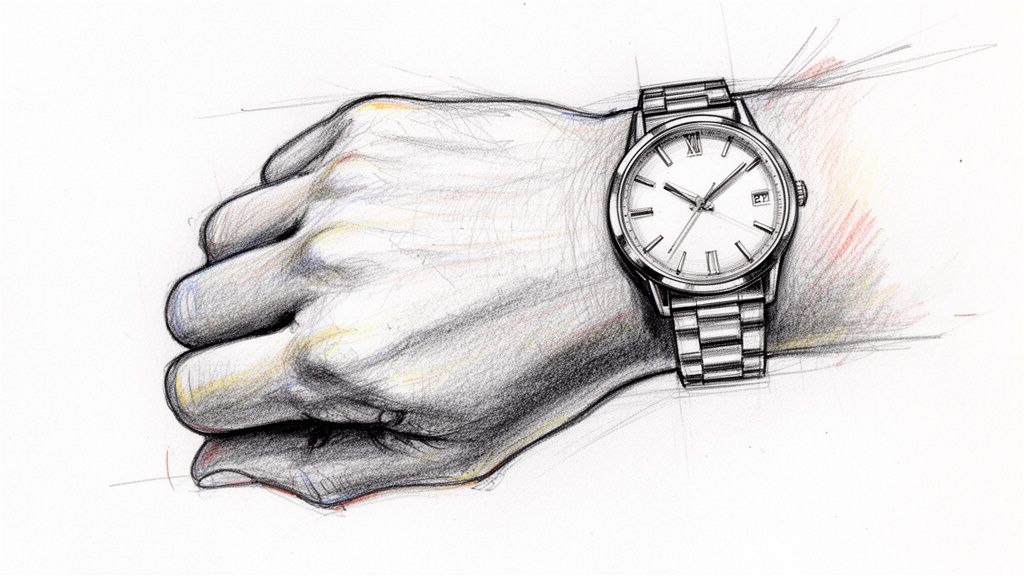
When something is worn every day, it becomes part of a story. It has to have a certain quiet strength, a resilience designed not just for a big event, but for the thousands of small moments that make up a life. We notice this in the details that make a watch comfortable and easy to read—the things that make it feel less like an accessory and more like a part of you.
This desire for a timeless, wearable piece is not a niche interest. Across the Middle East, women are a major force in the market for quality watches, with the UAE at the center of it. Research from MarkNtel Advisors shows the market's steady growth, which tells us something: a classic dial has an enduring style that smart-screens do not replicate.
At Spectrum, we don’t rush our design process. It rarely starts with a sketch. It starts with a feeling—the quiet confidence of a founder walking into her pitch, or the steady focus of a creative working late. These are the people we have in mind. Our conversations circle back to a watch being part of an ongoing story. We believe the best objects fit seamlessly into that narrative without trying to steal the spotlight.
We build our watches to be part of this quiet continuity. It is a philosophy that informs every choice we make, from the materials we source to the minimalist forms we finalize. It is an approach that champions longevity over novelty, and a personal connection over fleeting trends. We make everyday timepieces, meant to be worn, rotated, and eventually, repaired, like the models you can see in our collection for women.
The Day Ends
Golden afternoon light slices across the desk, catching the now-empty ceramic mug. Outside, the city is changing its tune. The workday's steady hum gives way to the low, relaxed thrum of evening as people drift home down familiar streets.
It is the morning's scene played in reverse, a quiet mirror image. A day that started with a slow brightening now ends in a gentle fade. We notice how the light catches the watch face one last time, a silent nod to a day spent before it slips below the rooftops. The watch sits there, a constant in a room of shifting shadows, its work done for now.
There is no dramatic finish, no big decision hanging in the air. Just this. A quiet moment, the gentle closing of a chapter in a story that does not end. The rhythm of the day slows, but the pulse is still there. Tomorrow, the light will return. The city will stir, and the routine will begin again, steady as ever. Time keeps its quiet, unwavering pace.
A Few Questions We Hear
Choosing something to wear for years is a quiet, personal conversation. As we have helped people find their timepiece, we’ve noticed a few questions appear again and again. These are not questions with a single right answer, but gentle prompts in the process of finding a companion for your wrist.
How Do I Choose a Watch Size That Feels Right?
We suggest forgetting rigid rules. Choosing a size is about how it feels on you. The right watch becomes a natural extension of your wrist, not a clunky piece that gets in the way.
A good starting point is to look at case diameters between 34mm and 38mm, which tend to have a balanced look on most wrists. But the real test is how it fits into your day. Does it slide easily under the cuff of your blazer? Does its weight feel reassuring, or is it a distraction? The perfect size is the one you almost forget you are wearing.
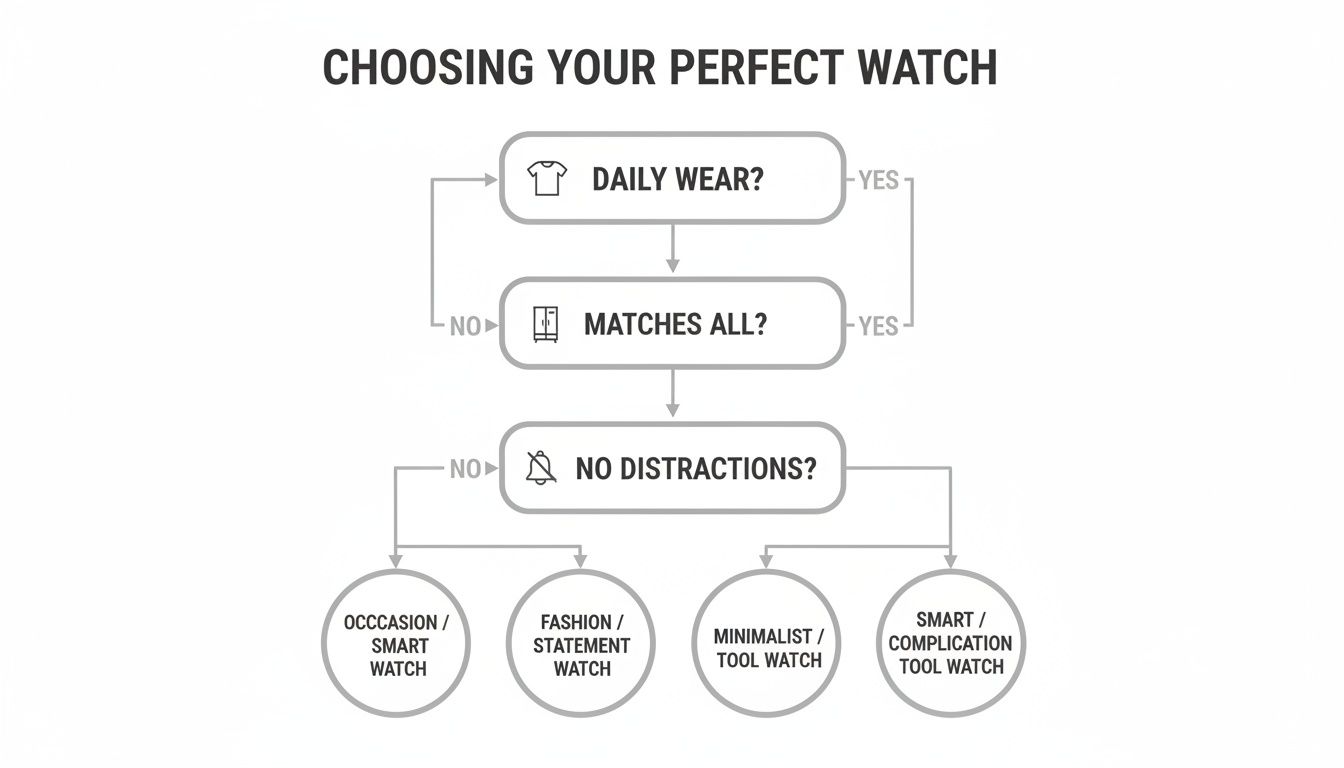
The ideal watch should feel like it has always been there, chosen for its effortless wearability, not its ability to get attention.
What Makes Stainless Steel Such a Good Choice?
We believe in materials that are built to last, and stainless steel is a quiet champion of endurance. It is not chosen for flashiness, but for its steady resilience and understated grace. This is a metal that can handle the reality of daily life—the accidental brush against a desk, the scrape of a handbag clasp.
Its cool, solid weight becomes a familiar, comforting presence on your wrist. It also has an incredible versatility, looking just as sharp with a business suit in the morning as it does with a knit sweater in the evening. Over the years, it develops a subtle patina, a story of a life being lived. It is a material that speaks to continuity.
When you are choosing an everyday watch, the material is the foundation of its story. Stainless steel tells a tale of quiet strength, aging with grace instead of just showing wear.
This focus on material is key to creating a piece that can one day be passed down. If you want to go a bit deeper, we have shared more of our thoughts on how to choose your first women's watch in our journal. It is a choice that goes beyond what simply looks good. Our Creative Mesh Band watch is an example of this thinking.
Should My Watch Match Every Outfit?
No. We lean away from the idea of "perfect matching" and more towards harmonious living. The most enduring style comes from pieces that feel authentic to you, no matter what you are wearing.
A classic stainless steel watch with a clean, simple dial does not need to be swapped out every morning. It becomes your signature, a constant thread running through your wardrobe, whether you are in tailored trousers, a flowing kaftan, or your favorite denim. The goal is not to match; it is to integrate. The watch is not just an accessory to the outfit; it is a part of you, and the outfit simply changes around it.
How Does a Traditional Watch Fit into Modern Life?
In a world of buzzing phones and endless notifications, a traditional analog watch offers a pocket of peace. It does one job with beautiful reliability: it tells you the time. That elegant simplicity is its greatest strength.
For the founder, the artist, or anyone navigating a busy city, it is a gentle reminder of the steady, tangible rhythm of the day, far from digital noise. Choosing to wear an analog watch is a small act of reclaiming your focus. It is an anchor to the present moment, not a portal to the next alert. It does not try to compete with your tech; it offers a thoughtful alternative.